HIGHLIGHTS
Montefiore Einstein Expands Minimally Invasive Laser Interstitial Thermal Therapy (LITT) Program, Offering New Hope to Children with Drug-Resistant Epilepsy
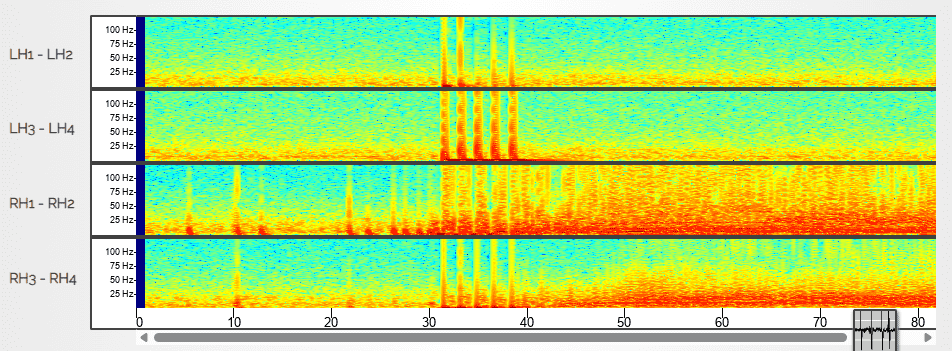
In 2025, the Montefiore Einstein Comprehensive Epilepsy Center expanded its minimally invasive epilepsy surgery Program, broadening access to laser interstitial thermal therapy (LITT) while advancing stereoelectroencephalography (SEEG) and neurostimulation for children with drug-resistant epilepsy. The Program’s growth reflects Montefiore Einstein’s continuing leadership in modern epilepsy care and its commitment to offering state-of-the-art, precision-guided treatment options that can help reduce recovery time and enhance the patient experience across the lifespan.
LITT has emerged as an important advancement in the treatment of drug-resistant epilepsy, providing a minimally invasive alternative to traditional open surgery for both adults and children. Using a stereotactically placed laser fiber guided by real-time magnetic resonance imaging (MRI) thermometry, the technique allows for precise ablation of epileptogenic (seizure-generating) brain tissue with targeted thermal energy while minimizing disruption to surrounding structures. This minimally invasive approach can reduce postoperative discomfort, shorten hospital stays and recovery times and help preserve neurological and cognitive function, making it an especially valuable option for select patients whose seizure foci lie in deep or eloquent areas of the brain.
Over the past year, our SEEG and neurostimulation programs have also expanded to include more pediatric patients, further broadening diagnostic and treatment options for children with complex or hard-to-localize epilepsy. SEEG allows for highly precise, minimally invasive mapping of seizure networks, informing individualized surgical planning and treatment strategies. When appropriate, neurostimulation therapies offer an additional pathway for long-term seizure control in patients who are not candidates for resective or ablative surgery.
The integration of SEEG for precise localization, LITT for targeted ablation and neurostimulation therapies for ongoing seizure control has expanded the number of patients who can benefit from a fully or largely minimally invasive surgical approach. Together, these advances create a comprehensive diagnosis-to-treatment pathway that may reduce or eliminate the need for open surgery, offering new possibilities for children and families facing drug-resistant epilepsy.
“This expansion reflects our commitment to advancing the full spectrum of epilepsy care,” said Alexis D. Boro, MD, Director of the EEG Laboratory at Montefiore Einstein and Associate Professor of Neurology at Albert Einstein College of Medicine. “By bringing LITT to more children, alongside our expanded SEEG and neurostimulation programs, we’re ensuring that every patient—from infant to adults—has access to the most sophisticated, minimally invasive treatments available today.”
Supported by state-of-the-art technologies—including robot-assisted electrode placement, positron emission tomography (PET), MRI, functional MRI, single-photon emission computed tomography (SPECT) and high-density electroencephalography (HD-EEG), as well as advanced image-fusion platforms that enable highly individualized surgical planning—these advancements reflect Montefiore Einstein’s commitment to providing a full spectrum of diagnostic and surgical services for world-renowned epilepsy care. Together, they offer families broader access to safe, effective and minimally invasive treatment options that can significantly improve quality of life and bring new hope to children and families affected by drug-resistant epilepsy.
We are one of the first Comprehensive Level 4 Epilepsy Centers, the highest designation from the National Association of Epilepsy Centers. This distinction recognizes our expertise across a broad continuum of pediatric and adult epilepsy subtypes and our ability to provide the latest and emerging precision medicine–guided treatments for the most complex cases. Montefiore Einstein is ranked in the top 1% of all hospitals in the nation for neurology and neurosurgery according to U.S. News & World Report.

Patient referrals
At Montefiore Einstein Neurology, we know that providing patients with the best possible care includes teamwork and trust. We work closely with our valued referring physicians to ensure open communication and reliable expertise.
Contact Us
Mark F. Mehler MD, Chair, Neurology
mark.mehler@einsteinmed.edu